Lessons for B2B and B2C Marketers

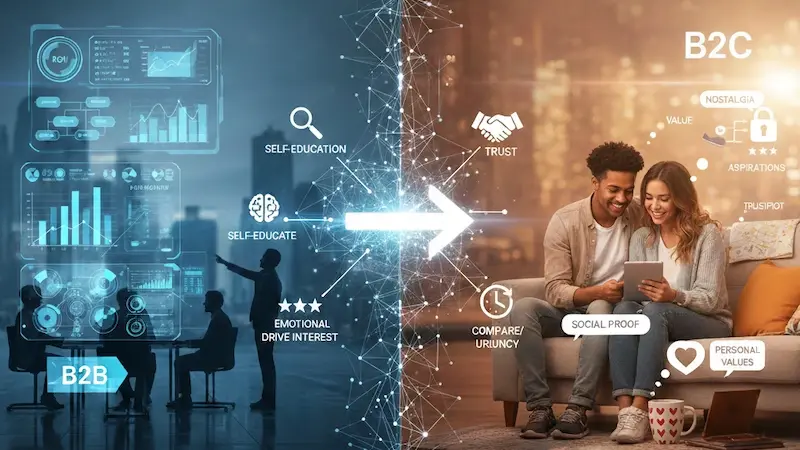
Buyers’ journeys vary across industries and niches. In some verticals, consumers make purchase decisions within a matter of moments. In others, however, buyers require days, weeks, or even months to move through the funnel and commit to a purchase.
Navigating buyer behaviour discrepancies is particularly apparent when comparing B2B and B2C markets, as these two buyer personas have distinctly different goals and priorities.
In B2B sectors, the sales cycle is lengthy and complex.
According to research, most B2B buying journeys are somewhat frustrating. Almost all (91%, to be precise) stall at some point during the process.
Complicating this is the fact that the average number of decision-makers per purchase is 13 within one organization.
What’s even more interesting is that a growing number of B2B buyers end up being dissatisfied with their purchases, primarily because the services and products they receive usually fail to meet their expectations.
Of course, finances also play a role in shaping the B2B sales cycle. Spending tends to be much higher for business purchases. It comes as no surprise that most professional customers seek exceptional value and ROI with as little delay as possible.
When targeting end-consumers, things are a bit different. These consumers also seek value and high-quality CX. However, their decision-making process often relies on emotions and relationships.
Research suggests that as much as 95% of buyer decisions are subconscious, while newer studies state that many B2C buyers allow personal values, aspirations, and even nostalgia influence their buying behaviour.
Nevertheless, while these differences between B2B and B2C verticals are significant, they don’t necessarily mean that marketing to these two consumer segments requires entirely different approaches. In fact, both of these groups exhibit several instances of shared buyer behaviour.
This article studies these shared behaviours, looking for instances where business buyers’ and end-consumers’ wants and priorities meet. Below, you’ll find six valuable lessons for both B2B and B2C marketing, helping you optimize your sales performance, regardless of the identity of your ideal customer base or the industry in which your brand operates.
Let’s dive in.
Most Buyers Self-Educate First, Then Reach Out
Independent buyers’ journeys are rapidly taking over both B2B and B2C sales cycles.
Research suggests that most shoppers prefer independent buying experiences.
According to a 2025 Gartner survey, 61% of business buyers prefer to move through the sales funnel without interacting with a company rep.
What’s even more fascinating is that,
73% actively avoid suppliers who send irrelevant outreach.
Things aren’t much different in the B2C sector either. Almost all end consumers conduct independent online research before clicking the ‘Buy’ button. And sometimes that isn’t even enough.
Nearly 95% go so far as to conduct their own product evaluation, even when deciding to purchase products based on influencer recommendations.
In other words, most buyers — whether end consumers or making purchase decisions on behalf of an organization — self-educate first. They reach out once they’ve collected sufficient data. This is when the buyer’s decision is made
Naturally, this tendency doesn’t mean that sales rep involvement is superfluous in most buyers’ journeys. On the contrary, data suggests that meaningful brand interactions are crucial for ensuring customer satisfaction.
B2B buyers are 1.8 times more likely to complete a quality deal when they engage with a sales rep.
Nevertheless, the trend shows that businesses must incorporate high-quality self-service resources into their sales funnel, especially when selling complex or innovative solutions.
Your product pages are one of the best places to do this. Modern buyers, regardless of your target market, will expect to educate themselves before moving into the lower stages of the sales funnel. They’re likely to use your product pages as decision-making tools intended to make them feel well-informed and fully confident in making a positive purchase decision.
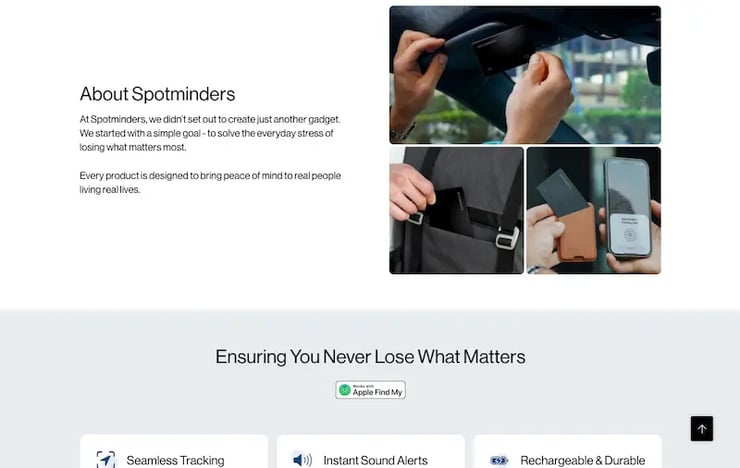
One of the best examples of how to optimize your sales materials for this common buyer behaviour comes from Spotminders.
This brand utilizes copy, visuals, and table-based content to facilitate rapid movement through the sales funnel. It does so primarily by immediately addressing a common customer frustration, then describing its solution. From there on, Spotminders explains how its product works through accessible and attractive visuals and explanations.
This approach supports self-guided product evaluation and aligns with both B2B and B2C buyer tendencies to learn and research products before committing to a purchase.
Emotional Triggers Drive Interest Before Logic Does
One of the most commonly overlooked buyer behaviours, exhibited by both B2B and B2C buyers, is that their entry into the sales funnel isn’t necessarily driven by logic. More commonly, emotional triggers drive interest before objective needs do, signaling that successful marketing campaigns must focus on engagement — not just sales.
When it comes to end consumers, the tendency to make buying decisions based on emotions isn’t exactly news.
Statistical data indicates that 60% of sales are driven by FOMO (fear of missing out) marketing.
Additionally,
37% of the global population falls under the category of aspirational buyers.
These are people who make purchase decisions based on an aspirational image of themselves and their lifestyles (rather than their realistic financial capabilities).
But here’s something that often gets ignored by businesses optimizing their sales funnels: B2B sales cycles also involve emotional triggers.
Although businesses seek measurable returns when investing in solutions to their pain points, one of the main drivers of their buying decisions is rooted in emotion or connection.
Data shows that familiarity strongly influences solution preferences. Furthermore, research from LinkedIn demonstrates that emotional B2B campaigns significantly outperform rational ones.
So, when it comes to powerful triggers that drive interest among B2B and B2C buyers, emotional marketing campaigns can provide the edge your company needs to engage new prospects and move them through the sales funnel.
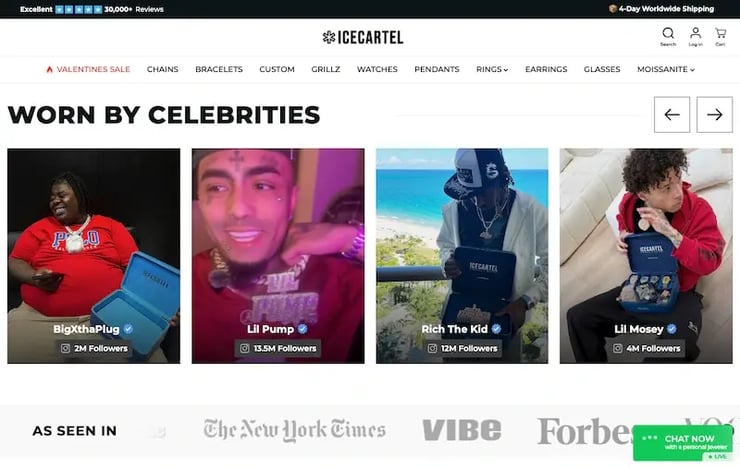
The Icecartel page is an exceptional example of emotional marketing in action, as it appeals to web visitors’ feelings far more than their rational sides.

A close look at the brand’s homepage reveals multiple attractive, aspirational visuals. It’s filled with luxury cues and lifestyle depictions. Overall, the page aims to create desire before providing any technical explanations.
This approach to web design perfectly reflects the fact that shoppers — whether B2B or B2C — are initially drawn in by how a product makes them feel rather than justifying their buying decisions with details, pricing, or comparisons.
Trust Is Built Long Before the Sales Conversation
Brand trust is a crucial factor in the typical buyer’s journey — whether your buyers are end consumers or professionals.
According to research on the influence of brand credibility,
88% of shoppers say that trust is as important as product quality and value for money when choosing what businesses to buy from.
However, the influence of trust isn’t merely reflected in conversion rates. Research consistently demonstrates that it can elevate brand loyalty, generate positive word of mouth, and even cause shoppers to spend more with a company they trust.
But here’s what you need to comprehend about the influence of trust on buyer behaviour. It matters far before shoppers move into the mid-to-low stages of the sales funnel. That is, you need to build trust long before engaging your prospects in a sales conversation.
So, what drives trust in B2C and B2B buyers’ journeys?
Well, highlighting competence, consistency, and customer-centricity in your marketing materials works wonders for accomplishing this goal.
Rippling, for instance, does this with a variety of content on its website.
In addition to the high-value social proof it showcases (including both customer feedback and reviews sourced from third-party websites), this brand also works hard to provide prospects with valuable thought leadership content. This includes its Mastermind series, a variety of original resources, such as reports and e-books. Finally, there’s also a selection of case studies targeting buyers at the lower stages of the sales funnel.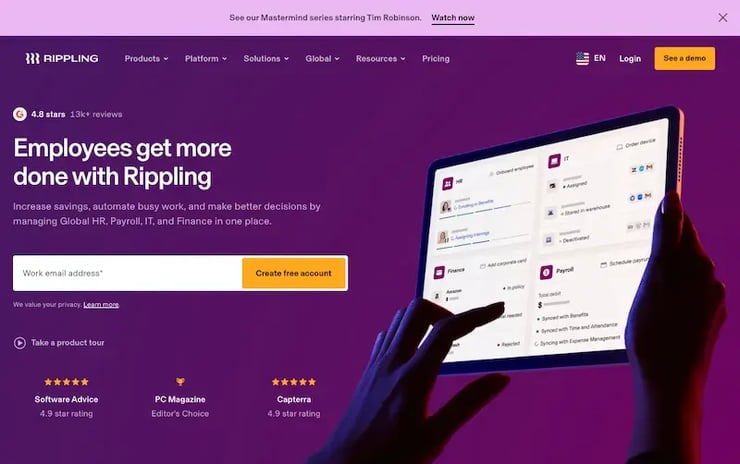
Social Proof Influences Decisions Across All Prices
While discussing the role of brand trust in influencing purchase decisions, it’s crucial to point out a common buyer behaviour. It’s the tendency to seek out social proof for all purchases, regardless of price point.
According to the latest Consumer Review Survey from Brightlocal:
In B2B verticals, reviews are just as important across the buyer’s journey. According to Gartner,
But here’s what’s interesting about the role of social proof within the buyer’s journey.
Although 78% of buyers report that the number of reviews they read grows as the price of the product they’re evaluating increases, 98% of consumers still read reviews for all their purchases.
With this in mind, one of the most essential marketing tactics for elevating brand trust and purchase intent includes showcasing social proof across the sales funnel.
Creatulize implements this strategy marvelously by combining customer feedback, UGC, and creator content across multiple distribution channels.
Such an approach builds product and brand awareness. It establishes trust even before consumers move into the mid-to-low stages of the buyer’s journey. Additionally, the social proof content justifies the somewhat high price of a solution that works for only one use case, effectively highlighting the unique benefits of Creatulize’s robot bed vacuum cleaner compared to more traditional cleaning products.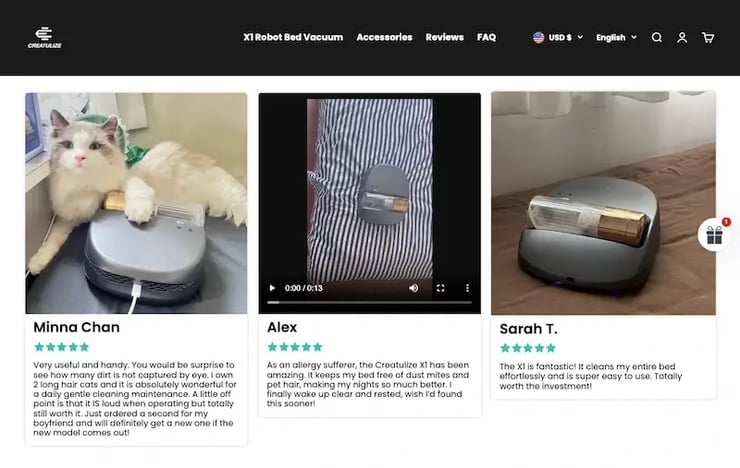
Clarity Beats Creativity When Evaluating Options
As we mentioned earlier, customer emotions strongly influence buyer behaviour at the awareness and purchase stages of the sales funnel. Nevertheless, it’s crucial to understand that during the evaluation stage, logic still reigns supreme.
Consumer behaviour research indicates that most B2B buyers compare multiple options before making a purchase decision.
According to Designrush, business buyers research between 2 and 7 solutions before purchase.
And things aren’t much different in the B2C sector either. End consumers don’t just compare different items; they aim to choose the one that delivers the most tangible benefits. They want to get the best possible deal,
With 83% of shoppers saying that they usually compare prices on a few sites before making an online purchase.
This buyer behaviour demonstrates a clear tendency for B2B and B2C shoppers to shift into a rational evaluation mode when considering their purchases. This is particularly true for high-ticket items. However, what remains consistent across all price points is a high regard for clarity and informational value over emotional or inspirational content.
That’s why prioritizing clarity over creativity — particularly in purchase-enabling content — plays such a tremendous role in guiding prospects toward the lower stages of the sales funnel.
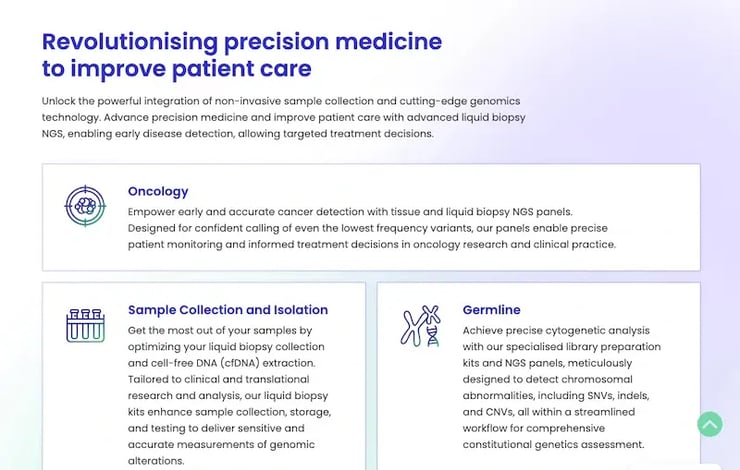
For example, Nonacus implements this tactic beautifully across its website.
This brand prioritizes detailed specifications, technology overviews, and feature breakdowns. It presents web visitors with such practical information before appealing to their emotions with storytelling or visuals. By doing so, the business effectively appeals to its target audience’s rational side, which is a much more powerful conversion driver in the context of medicine, where approach effectiveness must come before emotional investment.
Buyers Compare, Even With Urgent Purchases
The last buyer behaviour shared across B2B and B2C markets is that buyers will, inevitably, compare multiple options — even when they’re in a hurry to make a purchase.
Ultimately, all consumers seek value for money. Additionally, they request a strong alignment between their specific needs and the benefits potential solutions offer. That’s why personalized marketing messages work so well in elevating engagement rates and purchase intent.
However, what’s even more important is that marketing message relevance needs to resonate immediately — particularly in settings where buyers wish to make urgent purchases.
With this in mind, one of the most essential principles to guide your marketing activity — regardless of whether you’re targeting B2C or B2B buyers — is to integrate comparison into your messaging. This doesn’t necessarily just relate to direct competitor comparisons. You should emphasize the benefits that make your offer the best choice for your target audience.
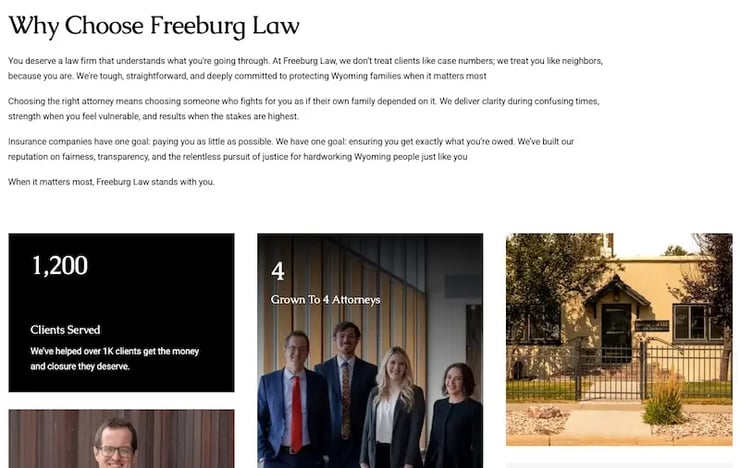
Freeburg Law does this beautifully.
If you look at this brand’s website, you’ll find that some of its primary value propositions relate to how the firm treats its clients. The content emphasizes that it views clients as neighbors rather than as case numbers. Additionally, the web copy highlights the company’s commitment to clarity, strength, and commitment to results.
The featured social proof supports these claims. And the focused-yet-empathetic approach effectively separates Freeburg Law from other options in the area, allowing it to convert more customers — even when those clients are in urgent need of legal representation.
Final Thoughts
Targeting B2C and B2B prospects may require slightly different marketing strategies to reach your desired results. But the simple fact is that there are multiple shared buyer behaviours across both verticals.
So, instead of feeling like you have to change everything about your approach when switching between B2B and B2C campaigns, remember these commonalities and use them to your advantage. Navigating buyer decisions isn’t easy, especially when it comes to decision stage marketing, but with the right insights, it’s not only possible; it’s guaranteed.
On the whole, a commitment to trust-building, providing prospects with informational value, and using emotional tactics strategically is bound to take you far. So don’t hesitate to try out these approaches for yourself and see how they serve you. They’re sure to deliver results.
Reach out to Aspiration Marketing today.