Boosting Your Brand Credibility with Social Media


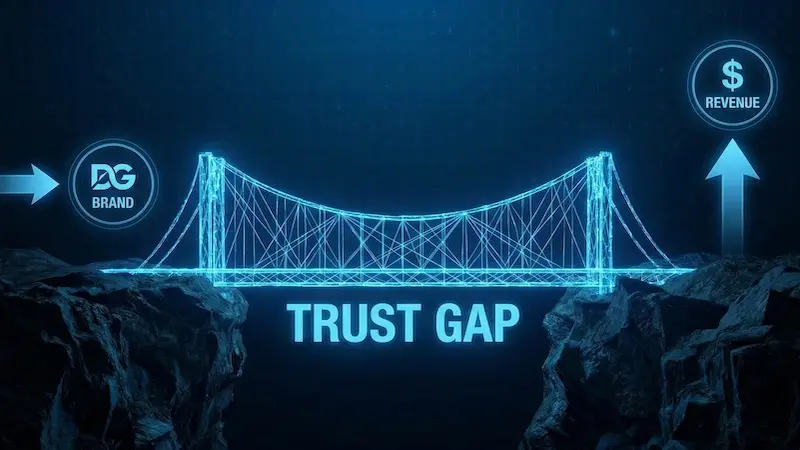
Have you ever wondered why we often trust a recommendation from a stranger on the internet more than a million-dollar television ad? It’s an interesting shift in human behavior. In today’s digital world, the “Trust Gap” is real. We are constantly flooded with content, yet we are more skeptical than ever. For a business, this means that simply having a product isn’t enough. You need to prove you are reliable.
So, how do you bridge that gap? The answer lies in how you use your social platforms. Building brand credibility with social media is no longer just a “nice-to-have” strategy; it is the cornerstone of the consideration stage of the buyer’s journey. If you don’t increase trust, you won’t get anywhere. When a potential customer is weighing their options, they aren’t just looking at your price—they are evaluating your company’s soul.
Recent data shows just how high the stakes are.
According to the Edelman Trust Barometer, a staggering 81% of consumers say they must be able to trust a brand before they will even consider making a purchase.
If your social media presence feels cold, inconsistent, or overly “salesy,” you aren’t just losing followers; you’re losing revenue.
Why Social Media is Your Best “Social Proof” Engine
Think of your social media profiles as a living, breathing portfolio. It’s where your brand’s values meet the public eye. But why does it carry so much weight? It’s because social media provides “social proof”—the psychological phenomenon where people look to the actions of others to reflect correct behavior for a given situation.
When you consistently provide helpful content, you are telling the world that you are an expert. When you interact with your followers, you demonstrate that you are approachable. This matters because
77% of consumers prefer to buy from brands they follow on social platforms over those they don’t.
Are you currently using your platforms to talk to your audience, or are you proving that you are for them? Credibility is built in the latter.
Strategy 1: Human Authority Over Corporate Noise
We’ve all seen those corporate social media accounts that seem to be run by a robot in a basement. They post press releases and dry product updates. Does that build trust? Rarely.
To build brand credibility with social media, you have to transition from a “corporate voice” to “human authority.” People trust people. This is why the rise of the “Social CEO” and employee advocacy is so powerful. When a leader shares their thoughts on industry trends or a behind-the-scenes look at a challenge they overcame, it creates a bond.
In fact, research indicates that:
65% of consumers say a brand’s leadership and its employees directly influence their decision to buy.
How to do it:
-
Encourage your team to share their expertise on LinkedIn.
-
Post short videos of your staff explaining a complex topic.
-
Show the “messy middle” of a project, not just the finished result.
By putting a face to the name, you stop being a logo and start being a partner.
Strategy 2: User-Generated Content as the Unfiltered Truth
If you tell me your product is the best in the world, I might believe you. If a hundred of your customers tell me, I will believe them. This is the power of User-Generated Content (UGC).
UGC is the digital version of a “thumbs up” from a friend. It eliminates the inherent bias that accompanies brand-created marketing. When a real person posts a photo of your product in their home or shares a story of how your service solved their problem, it acts as an unbiased testimonial.
The impact is massive:
93% of consumers find UGC to be extremely helpful when they are making a final purchasing decision.
To leverage this, make it easy for your customers to share their experiences. Create a unique hashtag, run a contest, or simply ask for feedback. When you reshare a customer’s post, you aren’t just filling your feed; you are validating your brand through the eyes of others.

Strategy 3: Anchor Your Claims with Data
In the consideration stage, your audience is asking, “Why?” They want to know why your solution is better than the competitor’s. This is where you move from “trust me” to “let me show you.”
Data-driven storytelling is a powerful way to build brand credibility with social media. It provides a factual anchor for your brand’s claims. Instead of saying “we are fast,” show a chart of your average response times. Instead of saying “we are eco-friendly,” share a data point about how many pounds of plastic you saved this year.
Studies show that:
73% of consumers are more likely to engage with brands that share “behind the scenes” data regarding their products and processes.
Quick Tip: Turn your data into easy-to-read infographics. A simple bar chart on LinkedIn or a “By the Numbers” carousel on Instagram can do more for your authority than a 2,000-word white paper ever could.
Strategy 4: The Art of the Public Response
Many brands fear negative comments. They see a critique, and their first instinct is to hide it or ignore it. However, the way you handle a public complaint is actually one of your most significant opportunities to build trust.
Think about it: If a brand ignores a frustrated customer, what does that say about their service? However, if that brand responds quickly, with empathy, and offers a genuine solution, they have proven themselves to be accountable. This is known as “transparency in crisis.”
Transparency pays off.
About 94% of consumers are more likely to stay loyal to a brand that offers complete transparency.
When you engage in “social listening“—monitoring what people say about you even when they don’t tag you—you can jump into conversations and provide value. It shows you are listening and that you care about your reputation enough to fix mistakes.
Strategy 5: Consistency is Your Reputation’s Foundation
Imagine meeting someone who is highly professional on Monday, but then acts like a completely different person on Tuesday. You’d find it hard to trust them, right? The same applies to your digital presence.
If your LinkedIn profile is strictly buttoned-up and academic, but your TikTok is full of memes and slang, it creates “cognitive dissonance.” The buyer gets confused about who you actually are.
Consistency doesn’t mean being boring; it means being recognizable. In fact,
90% of consumers trust a brand more when its messaging is consistent across all its social channels.
The Consistency Checklist:
-
Is your visual branding (colors, fonts, logos) the same everywhere?
-
Does your “voice” feel like it’s coming from the same person, even if the format changes?
-
Are your core values clearly visible on every platform?
Moving Beyond “Likes”: How to Measure Credibility
How do you know if your efforts are working? Many marketers get stuck on “vanity metrics”—things such as likes and follower counts. While these are okay for awareness, they don’t necessarily measure credibility.
To track how much people actually trust you, look for these indicators:
Creating a Bridge to the Future
Building brand credibility with social media is a marathon, not a sprint. It is the result of a thousand small interactions where you choose honesty over hype and value over volume. When you focus on being human, sharing genuine data, and listening to your customers, you build a fortress of trust that no competitor can easily dismantle.
At the end of the day, your social media presence should answer one question for the buyer:
“Can I rely on these people?”
At Aspiration Marketing, we specialize in helping businesses bridge this trust gap. By combining data-driven strategies with authentic inbound marketing, we help you turn your social presence into a powerful engine for high-quality leads and conversions. After all, when you have credibility, the sale becomes the natural next step in the conversation.
Would you like us to conduct a Brand Credibility Audit of your current social media channels to identify areas for improvement in your trust score?