Build Trust and Enhance Brand Credibility


Today’s digital landscape is oversaturated, meaning that simply standing out is no longer enough. You need to cut through the noise not just to be seen, but to be believed. That’s the core challenge facing every modern business. We’re living in a world of unlimited options, and consumers are naturally skeptical. They’ve been promised everything and delivered less. This fundamental dynamic makes trust the ultimate differentiator. Without it, even the most innovative product or service becomes background noise.
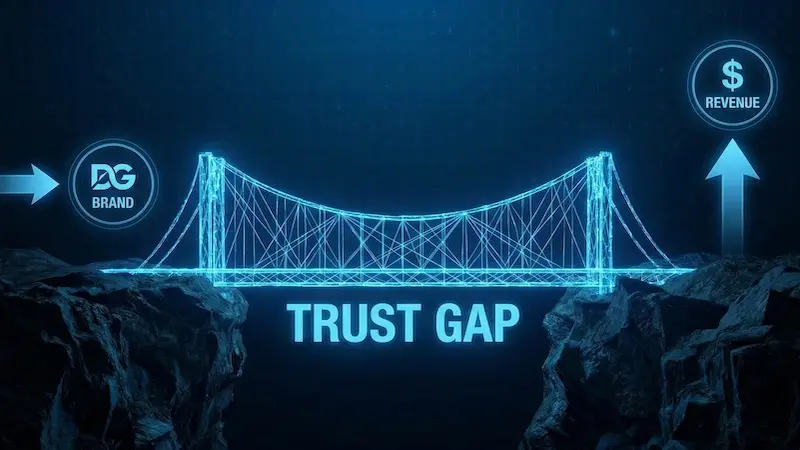
Trust is your most valuable digital asset.
The data proves this point decisively. Trust isn’t merely a nice-to-have; it’s a prerequisite for sales. Consider this powerful fact:
81% of consumers need to trust a brand to even consider buying from it.
Think about that number. If a potential customer doesn’t first believe in your brand, you’ve already lost the battle before the first sales pitch. Trust is the gatekeeper to your entire sales funnel.
This reality forces an essential, inquisitive question: What actionable digital strategies are you currently employing to earn that key? Are you still relying on old, static methods, or are you truly embracing the proven, data-driven approach required to enhance brand credibility in a dynamic online environment?
This guide provides a structured roadmap. We’ll detail the precise digital marketing and inbound strategies necessary to enhance brand credibility, transform customer skepticism into confident loyalty, and build a lasting foundation for market success. We’ll show you exactly how to move from claiming you’re trustworthy to demonstrably proving it.
The Foundational Pillar: Consistency and Authenticity
Before you can project credibility outward, you must solidify it internally. Brand credibility, at its heart, hinges on predictability and reliability. Consumers are subconsciously testing you every time they interact with your content.
This leads to a foundational, yet frequently overlooked, question: Can your customer recognize your brand, message, and voice regardless of the platform—whether they encounter you on an email, social media, your website, or a third-party review site? If the experience feels disjointed, confusing, or contradictory, your credibility suffers an immediate and often irreparable hit.
Defining and Protecting Your Brand’s Core to Build Immediate Trust
The journey to enhance brand credibility begins with uniformity. Your visual identity, your tone of voice, your core value propositions—all must align perfectly.
The financial cost of inconsistency is surprisingly high, yet often goes untracked. A lack of brand coherence is a credibility killer, and the market rewards those who commit to discipline.
60% of companies reported that being consistent in branding added 10% to 20% to their revenue growth.
Consistency doesn’t just look professional; it directly drives your bottom line because it reinforces trust and reliability.
Take a moment to contrast a major, recognizable brand—think of a company whose design and messaging are instantly identifiable, like Nike or Apple—with a generic competitor. The recognizable brand possesses an inherent level of trust simply because its look and feel are predictable and reliable. This predictability is a powerful signal of stability and commitment.
Actionable Strategy: Codifying Transparency and Voice
How do you enforce this uniformity? You need documented guidelines. Brand guidelines are not about restricting creativity; they are foundational tools that ensure every digital touchpoint—from a banner ad to a detailed whitepaper—reinforces the same trustworthy identity. This is where your brand’s voice and commitment to transparency are codified.
And transparency is non-negotiable for modern consumers.
90% of consumers state that transparency is essential when choosing brands.
This doesn’t just mean transparent pricing; it includes accessible terms and conditions, honest communication during service outages, and a clear path for customer service.
Imagine a technology company that saw a significant drop in support tickets simply by clarifying its warranty and return policy on every product page, checkout page, and confirmation email. By preemptively answering the consumer’s most common (and trust-eroding) questions, they used radical transparency to enhance brand credibility and improve efficiency simultaneously. It’s an easy win, but it demands internal discipline and codified processes.
Establishing Authority: SEO and Data-Driven Content
True credibility in the digital age means occupying the top position in search results—not because you paid for a fleeting ad slot, but because Google (and, more importantly, its users) deemed you the best, most definitive answer to their question.
Are you relying on short-term ads that vanish the moment your budget runs out, or are you investing in expert content that acts as a compounding asset, building long-term domain authority and helping you to enhance brand credibility for years to come?
Becoming the Definitive Authority Through Inbound Strategy
The reason inbound marketing is so powerful is rooted in consumer behavior.
68% of all online experiences begin with a search engine.
If your brand is not visible, authoritative, and easily found when a prospect is actively researching a solution, you are inherently lacking credibility in their eyes.
High organic ranking is, essentially, an algorithmic stamp of approval. When Google places your article at the top of the search engine results page (SERP), it validates you as a trusted and relevant source. This is why,
75% of users never scroll past the first page of search results.
Being on page one directly equals trust in the mind of the average consumer.
The key to achieving this authority lies in producing superior, data-driven content. You must look past superficial blog posts and commit to deep, comprehensive expertise. We observe that the average article ranking on Google’s first page contains approximately 1,447 words, indicating a need for a comprehensive and expert approach. This long-form content enables you to explore a topic thoroughly, utilize data to support your claims, and clearly demonstrate your in-depth understanding of the subject matter, making you the definitive source and allowing you to enhance brand credibility with every new post.
Earning Endorsements: Guest Blogging and Link Building
In the digital world, “endorsements” are known as backlinks—and they are critical to proving your expertise. When a credible, high-authority source links to your content, it’s not just an SEO signal; it’s a public validation of your expertise. That external stamp of approval is vital to building trust.
This is why strategic guest blogging and outreach remain essential. By placing expert content on high-authority websites in your industry, you are transferring that site’s credibility to your own brand. This is a deliberate method for showing search engines and consumers alike that your industry peers recognize you as a legitimate thought leader.

For example, consider the impact of a single backlink from a high-Domain Authority (DA) industry publication versus five low-quality, directory links. The one link from the authoritative source will carry exponentially more weight, credibility, and authority, proving its value far more effectively. This strategic focus on earning quality endorsements is a vital step toward establishing and maintaining authority.
Earning External Validation: Social Proof and User Experience
Consumers today trust each other far more than they trust corporate messaging. Brand credibility is no longer claimed in a mission statement; it is demonstrated through public, third-party validation. If your customers are willing to stake their own reputation on yours, you have succeeded.
A massive shift has occurred in how consumers seek validation.
54% of consumers now put their trust in online reviews first, significantly outweighing the opinions of friends/family (24%) or company claims (18%).
This data confirms that external validation has become the dominant force in the decision-making process.
The Non-Negotiable Role of Online Reviews
The significance of this external validation cannot be overstated.
85% of consumers trust online reviews as much as personal recommendations from friends and family.
This mandates that you treat your review sites—such as Google, Yelp, and industry-specific portals—as digital extensions of your brand and core marketing assets.
However, simply having reviews isn’t enough. You must actively engage with them.
88% of consumers would use a business that replies to all of its reviews, regardless of whether the review is positive or negative.
A public, courteous, and prompt response is an act of transparency that instantly builds trust. You show that you are accountable, you are listening, and you care enough to engage.
Consider the stark difference between an unaddressed negative review and a negative review that is immediately and courteously resolved in a public forum. The unaddressed review costs a company in lost sales and eroded trust. The resolved review demonstrates responsibility, empathy, and professionalism. The latter instance effectively utilizes a moment of failure to enhance brand credibility.
Prioritizing User Experience (UX) as a Trust Signal
While content and reviews are central, the technical performance of your website itself plays a critical, often hidden, role in generating trust. A slow website or poor navigation doesn’t just frustrate a user; it erodes credibility instantly. A seamless experience is perceived as a sign of professional competence and attention to detail.
Think about the first impression.
It takes just 0.05 seconds for people to form an opinion about your website.
If the pages load slowly, the navigation is confusing, or the site is unresponsive on a mobile device, your credibility is immediately compromised. Consumers assume that if you can’t manage your own digital platform, you certainly can’t manage their needs professionally.
The action here is explicit: Prioritize fast load times, flawless mobile optimization, and intuitive design. These aren’t just technical necessities; they are tangible signals that your business respects the user’s time and adheres to high professional standards. Investing in superior UX is a silent, but powerful, strategy to enhance brand credibility.
Scaling Credibility: The Choice for Consistent, Proven Strategy
The digital strategies required to enhance brand credibility truly are complex and demanding. They need expertise across technical SEO, high-authority content creation, user experience design, and proactive reputation management. This level of cross-functional skill and consistent effort can quickly hit an internal bottleneck.
Expert Insights vs. DIY Approach
This brings us to the core consideration stage question: Do you have the internal bandwidth and specialized, cross-functional expertise required to maintain brand consistency and generate high-authority content across every channel, every day?
The DIY credibility trap is tempting. Attempting a patchwork, do-it-yourself approach to complex inbound and digital solutions often leads to the very inconsistency and authority gaps you are trying to solve. When teams are stretched thin, brand guidelines are frequently overlooked, content quality suffers, and SEO best practices are neglected.
However, when brands commit to specialized, strategic efforts, the rewards are clear.
Marketers who prioritize inbound strategies—the bedrock of digital credibility—report that 60% view it as their highest quality source of leads.
Expert strategy accelerates this effect by ensuring every piece of the puzzle—from the technical backend to the emotional appeal of the content—works in perfect harmony.
The efficiency of a specialized partnership means the advantage of a unified team focused exclusively on data-driven content creation, technical SEO, and proactive reputation management. This level of dedicated focus ensures every strategic element works in concert to solidify your position and powerfully enhance brand credibility across the digital ecosystem.
Lasting Trust
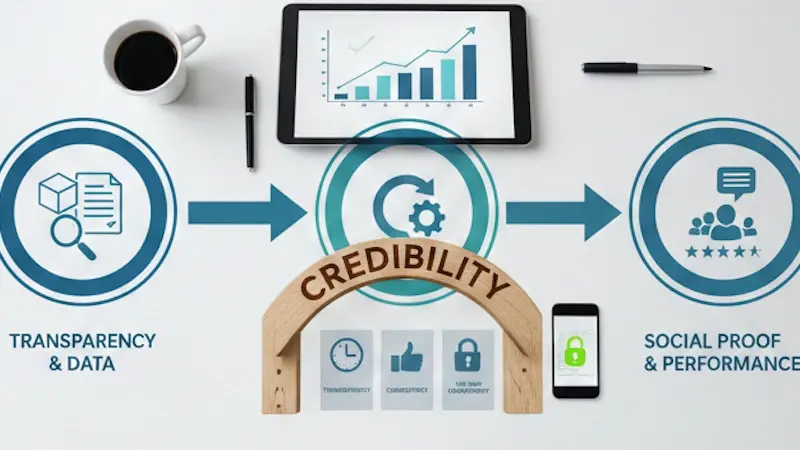
Building trust is not a simple, one-time marketing project; it is a continuous, data-driven cycle. The brands that win the long game are the ones that prioritize radical transparency, invest in deep inbound expertise, and treat every digital interaction as an opportunity to reinforce their reliability and competence.
If you are an ambitious company ready to translate these actionable strategies into guaranteed results and truly enhance brand credibility, then expert partnership is essential for scale and consistency.
At Aspiration Marketing, our proven approach leverages proprietary digital marketing and inbound solutions designed to foster unwavering trust and confidence. We specialize in data-driven content creation, technical execution, and strategic consistency necessary to position your brand not just as a competitor, but as the recognized thought leader and most trusted authority in your entire industry.