Top 5 CRMs for SMBs in 2026: Why HubSpot Stands Out


Are you still wrestling with spreadsheets or static customer relationship management (CRM) platforms that feel more like data graveyards than growth engines? As a small or midsize business, time is your most valuable asset. Why waste it on fragmented, clunky technology, or simply be unable to keep pace with your growth trajectory?
In today’s market, choosing the right CRM for SMBs is one of the most critical decisions you will make. It’s no longer just a digital address book for your sales team. A modern CRM is the central nervous system for your entire organization—from marketing and sales to customer service. The stakes are high: the global CRM market is projected to reach an impressive $262.74 billion by 2032. Every business is seeking a competitive edge, and your choice of platform is that edge.
This guide cuts through the confusion and noise. We’ll detail the essential criteria for a truly modern small business CRM in 2026. We will then evaluate the top contenders in the market. Most importantly, we’ll unpack why one particular platform, built on the core principle of dynamic data and unified alignment, consistently raises the bar and delivers scalable success.
The Critical Shift: Moving Beyond Static Data in SMB Operations
For a growing business, efficiency isn’t just a goal; it’s a survival mechanism. This is why the common “Data Graveyard” problem is so dangerous for small companies.
The High Cost of the “Data Graveyard” Problem
Think about your current data. Is it clean? Is it current? Probably not.
Salesforce and Dun & Bradstreet estimate that up to 91% of CRM data is incomplete, and 70% of data deteriorates and becomes inaccurate annually.
This isn’t just a minor administrative hurdle. For an SMB, data leakage due to decay and incompleteness is an existential threat. When sales teams chase old leads or marketing sends generalized messages, your most valuable resources—time and budget—are wasted.
The financial damage is measurable.
Studies show that 44% of companies report losing over 10% of their yearly income directly because of poor CRM data quality.
For small businesses operating on thin margins, this leakage is simply unsustainable.
A true CRM for SMBs solution must be more than a simple record keeper. It needs to be a system of intelligence—one that actively monitors, cleans, and updates your customer information automatically.
Why Integration is the Key to Scaling
Have you ever seen your sales and marketing teams operate in separate silos? This disconnect is often caused by fragmented technology. The marketing team uses one tool for lead generation, the sales team uses another for pipeline management, and service is on a third platform.
The problem? Customer data gets stuck. A lead that clicks on a marketing email might not be scored properly by the sales tool, meaning the sales rep is working blind. For real SMB growth, you need total alignment. A modern CRM must be the single source of truth that unites every customer touchpoint and empowers your teams to move forward together.
Your 2026 Checklist: Non-Negotiable Criteria for an SMB CRM
When evaluating the market for the best CRM, you must look beyond basic contact storage. For a platform to truly support and accelerate growth in 2026, it must satisfy these four critical criteria:
1. Scalability and Price-to-Value Ratio
Your business needs a platform that can start small and grow with you. This means a low barrier to entry—often a free, robust core—with clear, affordable pathways for scaling up features without forcing costly data migrations or add-on integration fees. The price must justify the value in automation and efficiency.
2. Intuitive User Adoption and Speed
A CRM is useless if your team refuses to use it. A complex, clunky, or unintuitive interface immediately sinks user adoption rates. A powerful small business CRM must be clean, easy to navigate, and require minimal training. It must focus on maximizing rep efficiency and reducing data entry friction.
3. True Integration Ecosystem (The Unified Platform)
Integration shouldn’t mean patching two separate tools together with duct tape and praying they communicate. The ideal platform must unify Sales, Marketing, and Service data on a single, native backend. This eliminates data silos and ensures every team sees the exact same, up-to-date customer story.

4. Automation and Dynamic Intelligence
Finally, the CRM must be proactive. It shouldn’t just record data; it must use it. The system should automatically calculate customer scores, trigger behavior-based workflows, and use dynamic properties to keep customer details clean and relevant without constant manual intervention.
Evaluating the Landscape: The Top Contenders for SMB Success (2026)
The CRM landscape is crowded, but for SMBs, the choice often boils down to a few major players. Let’s evaluate the top contenders against our non-negotiable criteria.
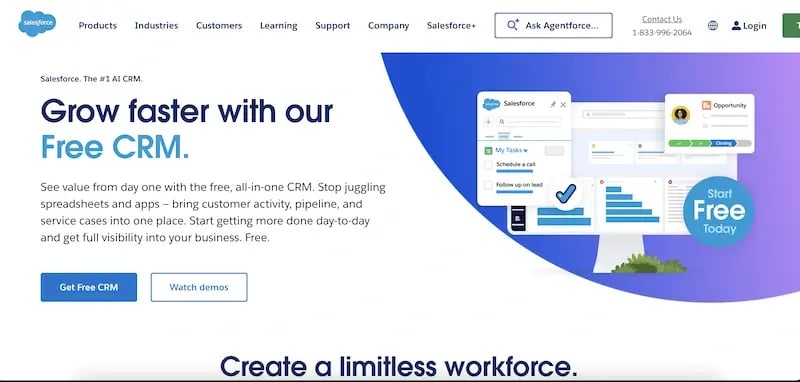
Contender 1: Salesforce Essentials (The Feature-Heavy Giant)
Salesforce is an industry powerhouse known for its immense depth and highly customizable platform.
-
Strengths: Unmatched feature availability, vast ecosystem of third-party apps, and a history of enterprise-level reliability.
-
Counterpoint (SMB Weakness): For the average SMB, Salesforce is often overkill. The implementation is notoriously complex, the learning curve is steep, and the total cost of ownership (TCO) rapidly balloons due to necessary add-ons and professional services. High friction for quick user adoption means the tool may go unused.
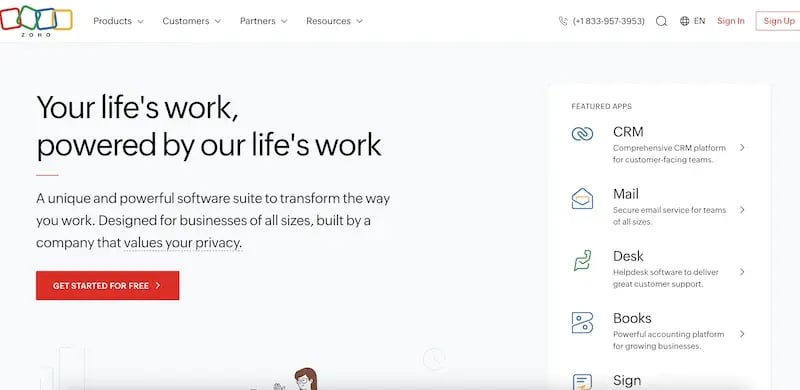
Contender 2: Zoho CRM (The Affordable Tool Suite)
Zoho’s primary appeal is its aggressive, low-cost pricing and its large, diverse suite of business applications.
-
Strengths: Highly affordable, offering tools across various business functions, from finance to HR.
-
Counterpoint (SMB Weakness): While affordable, the tools are often fragmented across many different apps. Integration between its own “hubs” can be clunky and inconsistent, creating the exact data unification problem you are trying to solve. This fragmentation undermines the goal of true sales and marketing alignment.
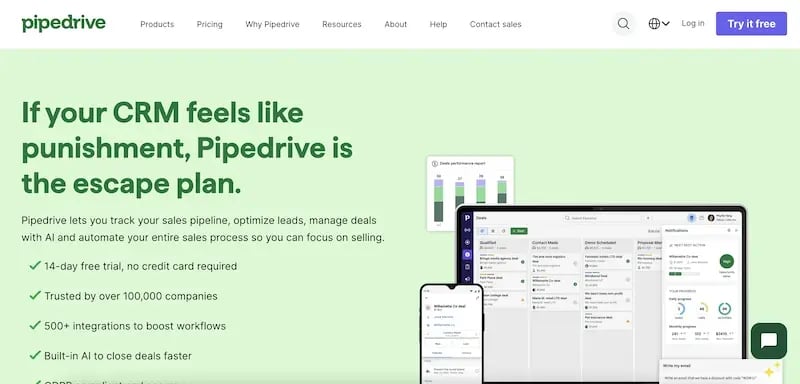
Contender 3: Pipedrive (The Pure Sales Pipeline Specialist)
Pipedrive is renowned for its excellent visual pipeline management and laser-like focus on the sales process.
-
Strengths: Simplicity, powerful visual pipeline features, and a clean interface designed to maximize a sales rep’s focus on deal-closing activities.
-
Counterpoint (SMB Weakness): Pipedrive often lacks the depth needed for modern, inbound-focused growth. It has limited native functionality in Marketing and Service features. This forces growing SMBs to patch together expensive third-party solutions for lead nurturing, creating data silos that frustrate customer communication and growth.
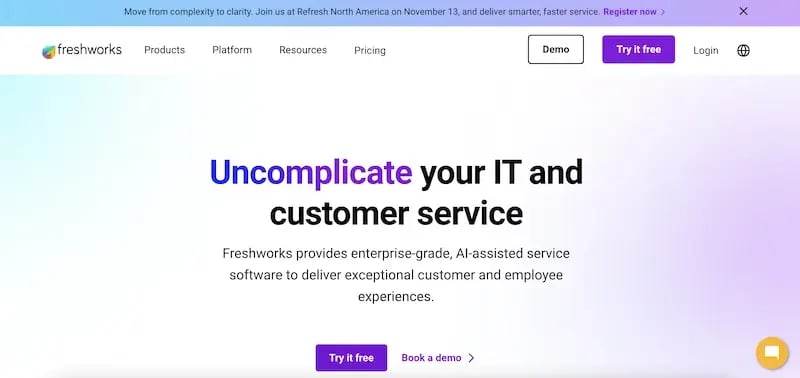
Contender 4: Freshworks CRM (The Customer-Centric Approach)
Freshworks focuses heavily on the post-sale relationship, often excelling in support and customer service automation.
-
Strengths: Strong emphasis on AI-driven service, excellent support ticket functionality, and a clear user interface.
-
Counterpoint (SMB Weakness): The platform is often service-centric rather than full-cycle. Marketing automation and inbound lead generation features feel like secondary add-ons. For a scaling SMB that needs to generate and nurture new leads consistently, this platform can fall short.
Contender 5: HubSpot CRM Platform (The Unified Dynamic Engine)
HubSpot is fundamentally different. It didn’t start as a sales tool that added marketing or a service tool that added sales. It was built from the ground up as a fully unified platform based on the principle of the Inbound Methodology. The free CRM core is the foundation, and everything else—Marketing, Sales, and Service—is built natively on top of it.
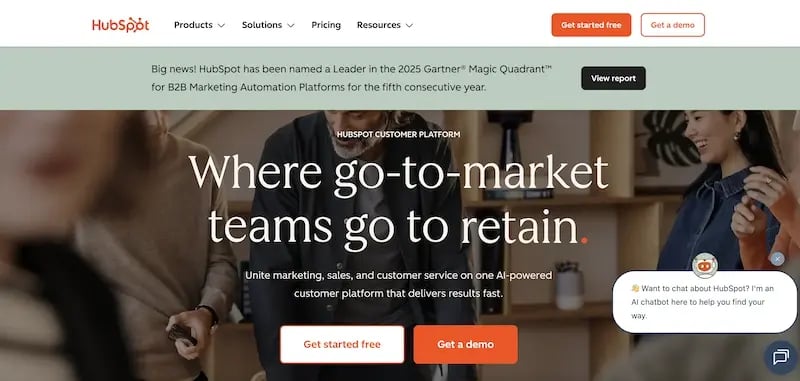 This inherent unity makes it the standard-setter for what a CRM for SMBs should be. Let’s explore why this dynamic difference is crucial for your future success.
HubSpot: The Future of CRMs for SMBs is Dynamic and Aligned
HubSpot’s platform is designed to overcome every major challenge faced by growing businesses: data decay, fragmentation, and user friction.
Powering True Personalization with Dynamic Data
How can your business personalize communication at scale without having to hire a full team of data scientists? The answer lies in dynamic data.
HubSpot’s unique Smart Properties turn static contact records into dynamic, actionable fields. These aren’t just custom text boxes; they are intelligent properties that automatically update, calculate, and score data.
-
Calculated Properties can track metrics like “Days Since Last Purchase” or “Average Deal Size.”
-
Score Properties tracks engagement, assigning a numerical value based on every website visit, email open, and form submission.
This intelligence allows an SMB to automate list segmentation and lead prioritization instantly. This isn’t just a marketing trick; it delivers real results.
Personalization can boost total income by 10–15%, with some studies showing returns up to 40%.
This level of targeting demands dynamic data fields.
Automation that Drives Real Revenue
The single biggest advantage of HubSpot is the seamless interplay between its hubs. Since the Marketing, Sales, and Service teams all draw from the same free CRM database, there are no integration points that can fail. Data flows instantly.
The result is truly intelligent automation. Marketing campaigns can automatically hand off a “sales-ready” lead to the sales team the moment their Lead Score property crosses a specific threshold.
This alignment turbocharges your outreach.
Personalized Calls-to-Action (CTAs), which draw from a contact’s current industry or status data, perform an astonishing 202% better than generic ones.
This level of precision is only possible when sales content, service actions, and marketing messages all draw from a single, unified source of truth.
Retention Built on Relationships
A successful CRM isn’t just about closing deals; it’s about nurturing long-term value. HubSpot’s Service Hub ensures that when a customer moves from prospect to client, the service team has instant access to every detail of their journey, including all sales and marketing interactions.
This complete, unified view means better support, faster issue resolution, and ultimately, stronger loyalty. The data supports this approach:
Businesses that leverage a robust, unified CRM report customer retention rates increasing by 27%.
For an SMB relying on the long-term value of its customers, this ROI is priceless.
Unrivaled User Experience: The SMB Advantage
For a growing business, every minute spent on implementation or training is time taken away from selling. HubSpot’s clean, intuitive interface, coupled with the comprehensive resources of the HubSpot Academy, significantly lowers the barrier to entry and minimizes training costs. The fact that the core HubSpot CRM features are available for free means your team can start using the essential tools immediately, reducing friction and ensuring rapid user adoption—a critical factor for resource-conscious SMBs.
Making the Consideration-Stage Decision: Investing in Unified Growth
The best small business CRM for 2026 isn’t the one with the most individual features; it’s the one with the most unified data, the most intelligent automation, and the clearest path for your team to scale. HubSpot excels because it was designed to be a single, dynamic platform that eliminates silos, enabling every part of your organization to work together seamlessly. It’s a true growth engine built for the way businesses need to operate today.
Are you ready to stop wasting time on fragmented systems and bad data and start focusing on scalable, personalized, and proactive growth?
Choosing and implementing a dynamic platform requires expert strategy and hands-on guidance to maximize its impact. At Aspiration Marketing, we specialize in implementing and optimizing the HubSpot CRM Platform. We ensure your sales, marketing, and service teams are perfectly aligned from day one, helping you set up crucial Smart Pr operties and workflows to drive measurable results and unlock your full growth potential.
Start building your future growth engine today.